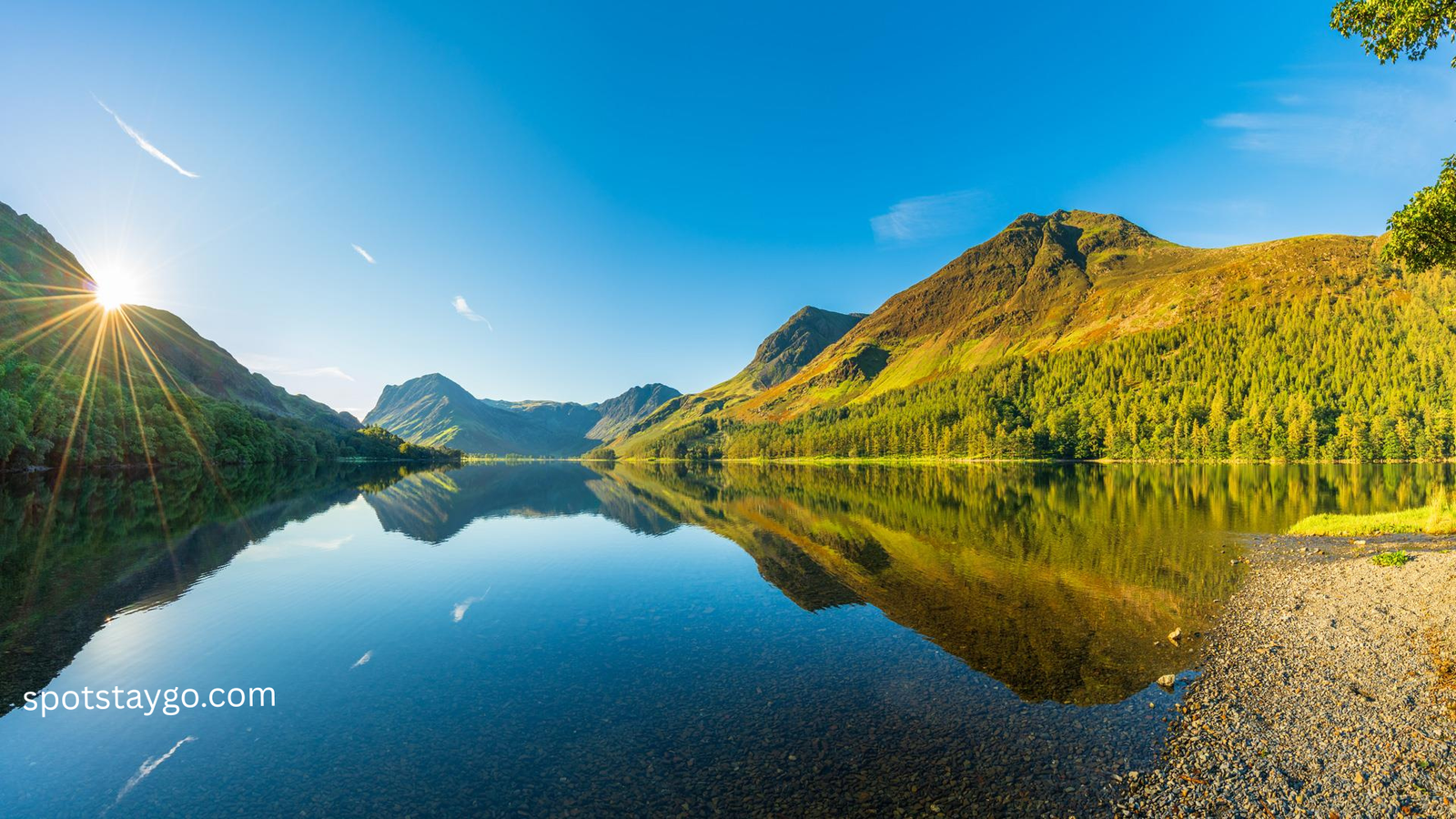
Incredible Best Destinations in England 2025- England is the largest and most populous of the four constituent countries of the United Kingdom, located on the island of Great Britain. It shares its borders with Scotland to the north, Wales to the west, and the English Channel to the south.
England has a rich and fascinating history, and its capital, London, serves not only as the capital of England but also of the entire United Kingdom. It is an integral part of the British Isles. However, England is often mistakenly referred to as the whole of the United Kingdom or the island of Great Britain.
Incredible Best Destinations in England 2025-
In 2025, England offers travelers a chance to explore a wide range of fascinating destinations. Some of the highlights include-
- London– home to iconic landmarks such as the Tower of London and the British Museum.
- Bath– famous for its historic Roman Baths.
- Lake District– renowned for its breathtaking natural landscapes.
- Cotswolds– celebrated for its picturesque villages.
- York– admired for its medieval charm and the magnificent York Minster.
- Other notable destinations include the Jurassic Coast, Stonehenge, and the vibrant cities of Liverpool and Manchester.
Incredible Best Destinations in England 2025-
A. History and Culture-
| London | Bath |
| York | Stonehenge |
1. London-
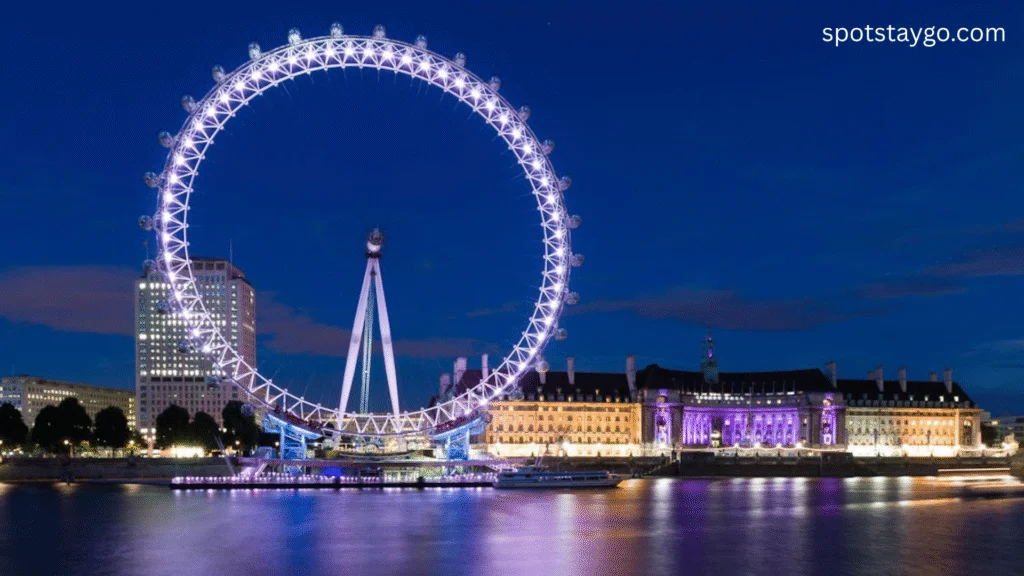
London is the capital and the largest city of both England and the United Kingdom. Recognized as one of the world’s foremost global cities, it has a profound impact on art, culture, entertainment, fashion, business, finance, education, healthcare, media, science, technology, tourism, transportation, and communication. It stands as Europe’s most economically powerful city and is among the world’s leading financial hubs.
The city is home to four UNESCO World Heritage Sites: the Tower of London, Kew Gardens, the Palace of Westminster (including Westminster Abbey and St Margaret’s Church), and Greenwich — famous for the Royal Observatory, the Prime Meridian (0° longitude), and Greenwich Mean Time (GMT).
*Top Places to Visit in London in 2025-
London also boasts numerous iconic landmarks, such as Buckingham Palace, The London Eye, Piccadilly Circus, St Paul’s Cathedral, Tower Bridge, Trafalgar Square, and The Shard.
In addition, the city is a cultural powerhouse, housing world-class museums, galleries, libraries, and theatres, including the British Museum, National Gallery, Natural History Museum, Tate Modern, British Library, and the renowned West End theatres.
London is also served by the London Underground, the world’s oldest underground railway system, which continues to play a vital role in connecting the city.
2. Bath-
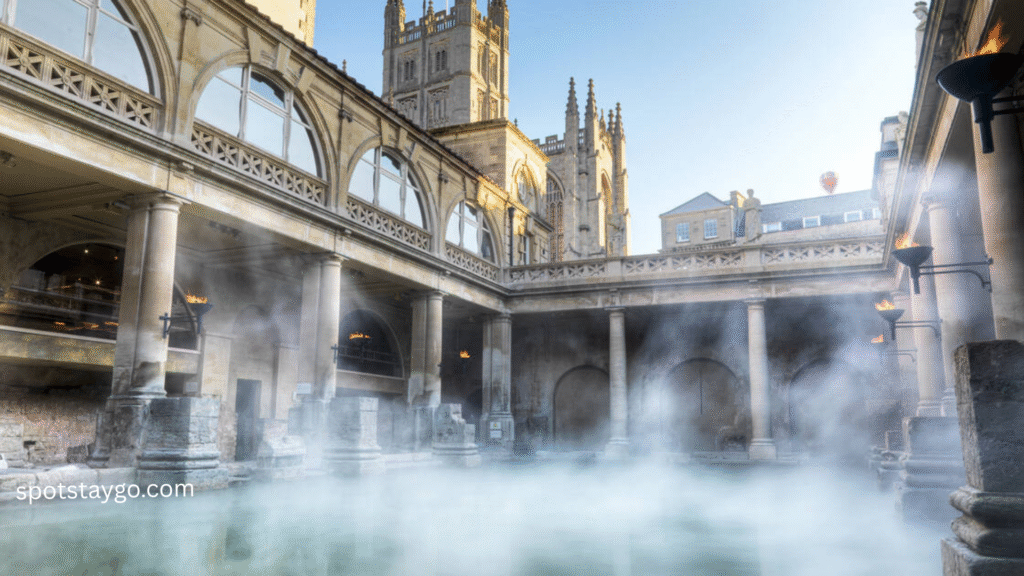
Bath is a renowned city located in Somerset, England, famous for its Roman-built baths, from which the city derives its name. According to the 2021 census, Bath had a population of 94,092. The city lies in the valley of the River Avon, about 156 km west of London and 18 km southeast of Bristol.
In 1987, Bath was designated a UNESCO World Heritage Site, and in 2021 it was further recognized as part of the international World Heritage listing of the “Great Spa Towns of Europe.” Bath is also the largest city and settlement in Somerset.
*Some of the city’s top attractions include-
- The Roman Baths, Pulteney Bridge, and the Holburne Museum.
- The Roman Baths were awarded Tripadvisor Travelers’ Choice Best of the Best 2025.
- For relaxation, Thermae Bath Spa has been named “Best UK City Spa” by the Good Spa Guide Awards 2025.
- Visitors can also explore the Jane Austen Centre, stroll through the Botanical Gardens in Victoria Park, or visit Bath Abbey and No. 1 Royal Crescent, two of the city’s most iconic historic landmarks.
3. York-
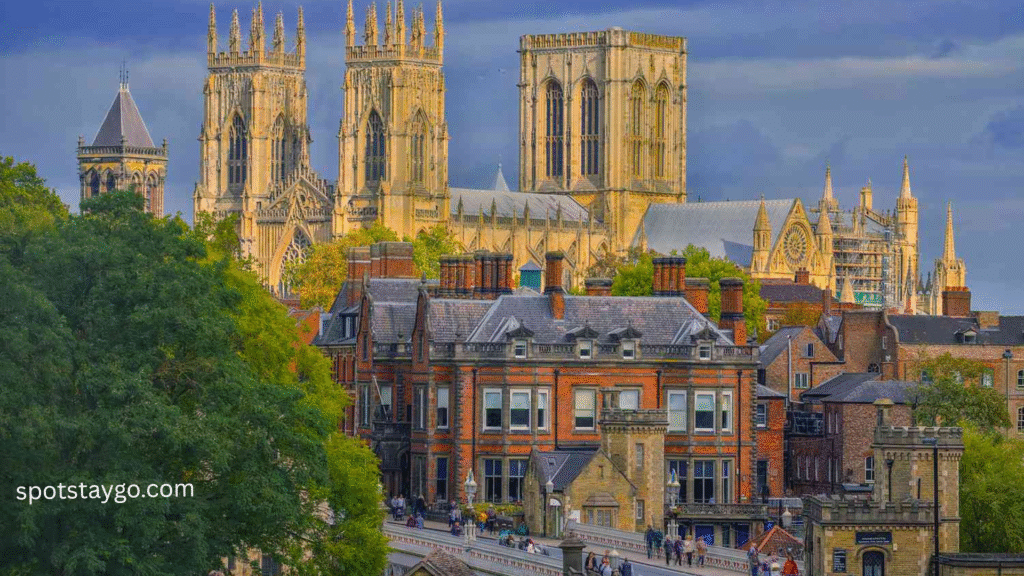
York, located in North Yorkshire, England, is a historic Roman cathedral city situated at the confluence of the Ouse and Foss Rivers. The city is home to several ancient buildings and structures, including the minster, castle, and city walls, all of which are designated as Grade I listed sites. York is also the largest settlement and administrative center of the wider City of York district.
The city was founded in 71 AD under the name Eboracum. It later became the capital of the Roman province of Britannia Inferior, and subsequently served as the capital of the kingdoms of Deira, Northumbria, and Scandinavian York. During the Middle Ages, York emerged as the religious center of Northern England and developed as a major hub of the wool trade.
History-
The Romans referred to York as Eburacum or Eboracum, a Latinized form of the Brittonic word Eburacon. This is believed to mean “place of the yew trees,” derived from eburos and the suffix -āco(n). However, since Eburos was also recorded as a personal name, an alternative interpretation is “estate of Eburos.” Interestingly, the 12th-century historian Geoffrey of Monmouth attributed the name’s origin to a legendary king named Ebraucus.
*Top Places to Visit in York in 2025-
- The magnificent York Minster
- The historic Clifford’s Tower
- The famous medieval shopping street, The Shambles
*Other must-see attractions include-
- The National Railway Museum
- The Jorvik Viking Centre
- Scenic walks along the York City Walls
- Themed experiences like the York Dungeon and Ghost Tours
- The fascinating Yorkshire Air Museum and the historic York Castle Museum
4. Stonehenge-
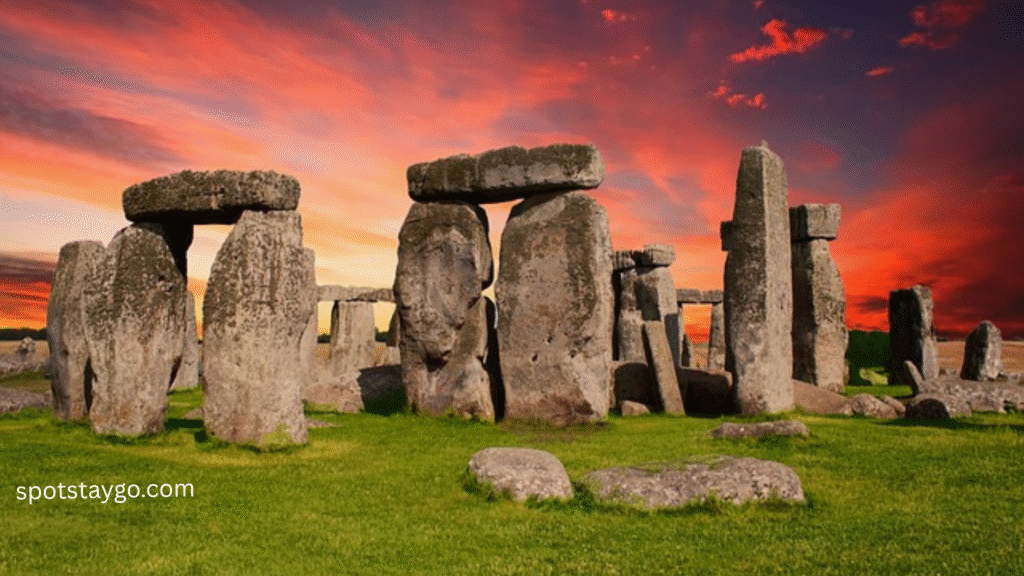
Stonehenge is a prehistoric megalithic monument located in Wiltshire, England, on the Salisbury Plain, about 3 km west of Amesbury. The monument consists of an outer ring of vertical sarsen stones, each around 13 feet tall, 7 feet wide, and weighing about 25 tons. These massive stones are topped with horizontal lintel stones, fitted together using mortise and tenon joints—a unique feature that sets Stonehenge apart from other monuments of its time. Inside this ring lies a circle of smaller bluestones, and within them stand the imposing trilithons—pairs of huge vertical sarsens capped with a lintel.
The entire structure, now partially in ruins, is precisely aligned with the sunrise at the summer solstice and the sunset at the winter solstice.
The construction of Stonehenge took place in several phases. It began around 3100 BCE and continued until about 1600 BCE. The famous sarsen circle was erected between 2600 BCE and 2400 BCE. The surrounding circular earth bank and ditch, which belong to the earliest stage of the monument, date back to around 3100 BCE. Radiocarbon dating indicates that the bluestones were set in their current position between 2400 and 2200 BCE, although they may have been present at the site as early as 3000 BCE.
B. Natural Beauty-
| Lake District National Park | Jurassic Coast |
| Cotswolds |
1. Lake District National Park–

The Lake District, also known as the Lakes or Lakeland, is a renowned mountainous region and national park located in Cumbria, north-west England. It is celebrated for its breathtaking natural landscapes—lakes, coastlines, and mountains—as well as its literary associations with Beatrix Potter, John Ruskin, and the Lake Poets.
The region is home to England’s highest mountains, including Scafell Pike, Helvellyn, and Skiddaw. It also boasts a total of 16 major lakes. Among them, the most famous is Windermere, stretching 18 km in length and covering 14.73 sq km, making it England’s longest and largest lake. Meanwhile, Wast Water, with a depth of 259 feet, holds the title of England’s deepest lake.
The Lake District National Park was established in 1951, covering an area of 2,362 sq km, which includes nearly the entire Lake District. In 2017, it was designated a UNESCO World Heritage Site.
However, the town of Kendal, some coastal areas, and the Cartmel and Furness Peninsulas lie outside the park’s boundaries. The Lake District was declared a national park on 9 May 1951, just a month after Britain’s first national park, the Peak District. Its original boundaries remained intact until 2016, when it was expanded eastward by about 3% towards the Yorkshire Dales National Park to incorporate areas of high scenic value around the Lune Valley.
2. Jurassic Coast-
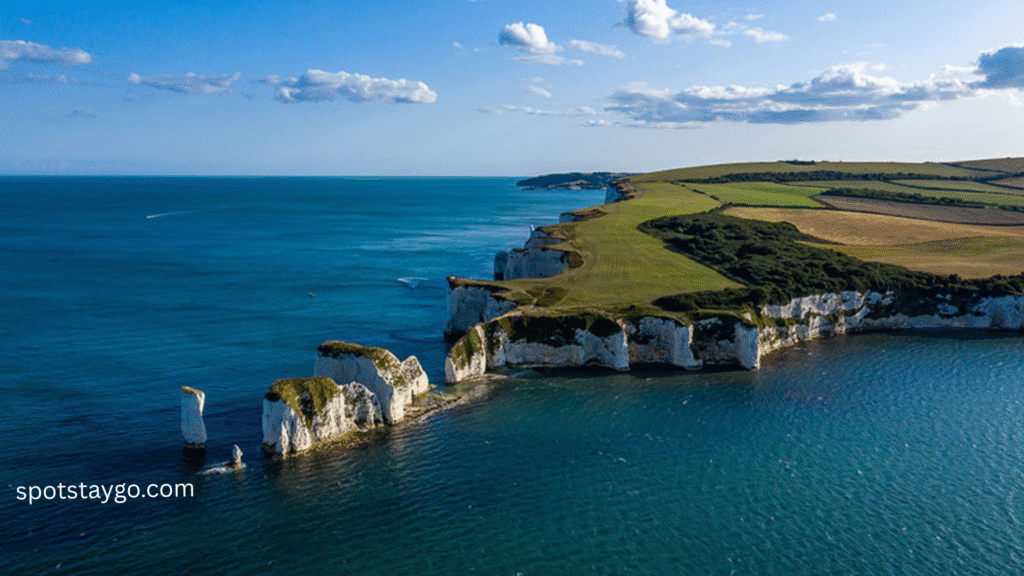
Jurassic Coast, also known as the Dorset and East Devon Coast, is a renowned UNESCO World Heritage Site located along the English Channel in southern England. Stretching about 154 km from Exmouth in East Devon to Studland Bay in Dorset, it was inscribed on the World Heritage List in December 2001.
The region’s geological history spans nearly 185 million years. Here, coastal erosion has revealed an almost continuous sequence of rock formations from the Triassic, Jurassic, and Cretaceous periods. Over time, this area has been a desert, a shallow tropical sea, and a swamp, with fossils of various ancient creatures preserved within its rocks.
*Key attractions of the Jurassic Coast include-
- The iconic Durdle Door and Lulworth Cove
- Fossil-rich beaches of Lyme Regis and Charmouth
- The historic ruins of Corfe Castle
- The natural beauty of Old Harry Rocks
Spanning nearly 95 miles, this World Heritage Site offers visitors an extraordinary mix of geological wonders, fossil-hunting opportunities, and additional highlights such as the Swanage Railway and Monkey World.
3. Cotswolds-
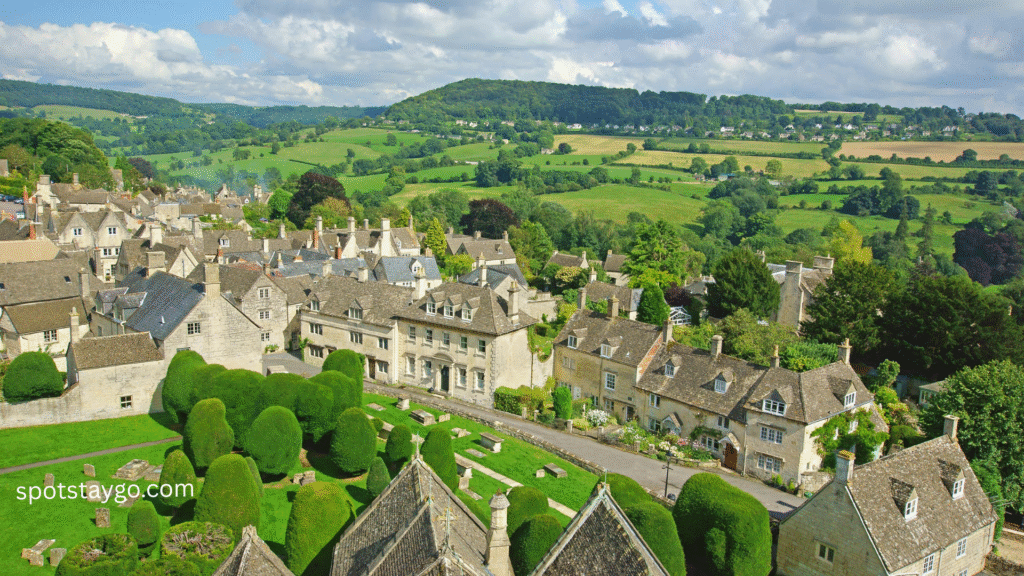
The Cotswolds is a beautiful region in southwest and southeast England, with parts extending into the West Midlands. Stretching from the Upper Thames River meadows to the slopes above the Severn Valley and the Vale of Evesham, the Cotswolds are renowned for their rolling hills and picturesque landscapes. The region is defined by its Jurassic limestone bedrock, which creates distinctive grasslands and provides the golden-colored Cotswold stone used in local buildings.
In 2021, the largest excavation of Jurassic echinoderm fossils took place in a quarry here, uncovering many rare and previously unknown species. Archaeological evidence from Cotswold Edge burial sites shows Neolithic settlements, along with remains of Bronze Age and Iron Age hill forts. Later, during the Roman era, the area saw the construction of sites such as Chedworth Villa, settlements like Gloucester, and the famous Fosse Way, originally a Celtic route.
*Best places to visit in the Cotswolds in 2025-
- Charming villages – Castle Combe and Bourton-on-the-Water
- Historic landmarks – Sudeley Castle and Blenheim Palace
- Beautiful gardens – Hidcote Manor Garden and Highgrove Garden
- Unique attractions – Cotswolds Distillery and Gloucestershire Warwickshire Steam Railway
- Bustling market towns – Stow-on-the-Wold and Burford
The Cotswolds remain one of England’s most enchanting destinations, celebrated for their scenic villages, historic heritage, and natural beauty.
C. Cities And Entertainment-
| Liverpool | Manchester |
1. Liverpool-
Liverpool Football Club is a renowned professional football club based in the city of Liverpool, England. The club competes in the top tier of English football, the Premier League. Founded in 1892, Liverpool joined the Football League the very next year and has played its home matches at Anfield Stadium ever since. Today, Liverpool is considered one of the world’s most valuable and widely supported football clubs.
The club was formed following a dispute between the Everton committee, club president, and Anfield’s landowner John Houlding. After playing at Anfield for eight years, Everton moved in 1892 to its new ground at Goodison Park, across Stanley Park. Houlding then established Liverpool FC, keeping Anfield as its home ground. Initially named “Everton FC and Athletic Grounds Ltd.” (Everton Athletic), the club was renamed Liverpool FC in March 1892. Three months later, after the Football Association refused to recognize it as Everton, the club was officially registered as Liverpool FC.
*Top Attractions in Liverpool (2025)-
- Royal Albert Dock – a historic waterfront filled with museums and shops
- The Beatles Story and The Cavern Club – celebrating the city’s legendary musical heritage
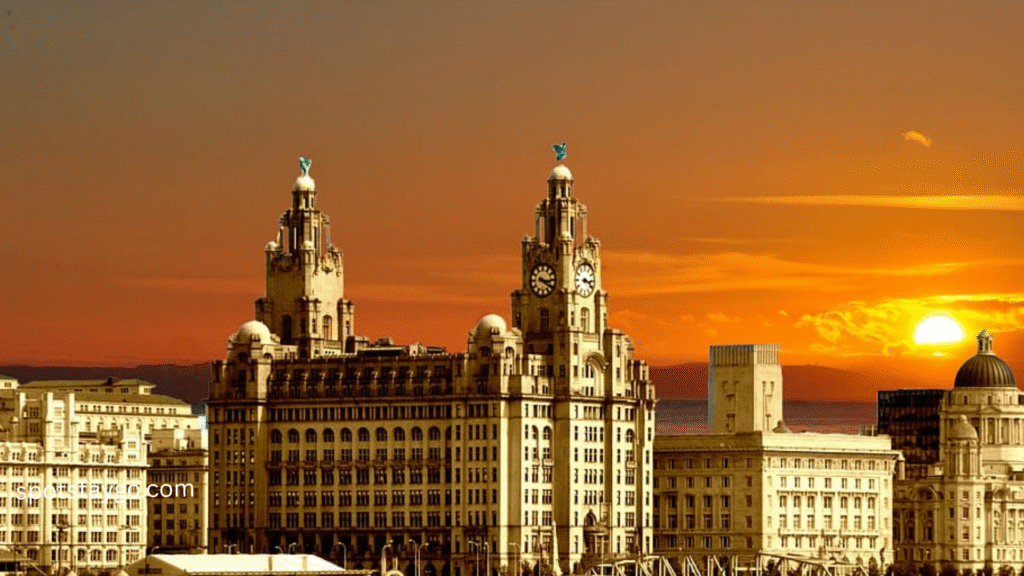
- The magnificent Liverpool Cathedral
- The iconic Anfield Stadium – a must-visit for football fans
- Other highlights – Museum of Liverpool, Walker Art Gallery, and the Merseyside Maritime Museum
With its rich sporting tradition, legendary music legacy, and diverse cultural landmarks, Liverpool stands out as one of England’s most vibrant and attractive destinations.
2. Manchester-
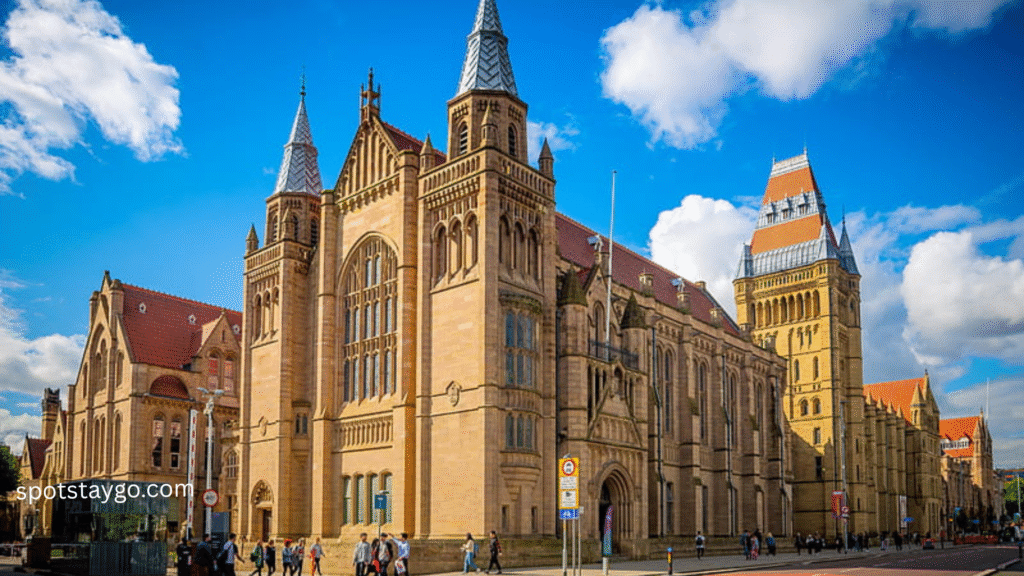
Manchester, located in Greater Manchester, England, is a major city and metropolitan borough. Often referred to as the “Capital of the North”, it is recognized as the world’s first industrial city and officially gained city status in 1853.
The history of Manchester traces back to the Roman fort of Mamucium (or Mancunium), established around AD 79 on a sandstone bluff near the confluence of the Medlock and Irwell Rivers. During the Middle Ages, Manchester remained a manorial township, but by the late 19th century, it had begun to expand at an astonishing pace.
With the rise of the Industrial Revolution, Manchester became the world’s first industrial city, driven largely by the boom in textile manufacturing. This rapid growth led to widespread unplanned urbanization. Historically part of Lancashire, the city expanded in the 20th century to include areas south of the River Mersey, such as Wythenshawe in 1931.
*Top attractions in Manchester in 2025-
- The newly expanded Manchester Museum, winner of the 2025 European Museum of the Year
- The historic John Rylands Library
- The interactive National Football Museum
- The Science and Industry Museum
- The expansive and scenic Heaton Park
- Vibrant districts such as the Northern Quarter and the Gay Village
Today, Manchester is celebrated for its industrial heritage, cultural landmarks, world-class museums, and dynamic urban lifestyle, making it one of England’s most captivating cities.
Best Majestic Destinations in Canada 2025